









The last week of October proved quite interesting for the Narendra Modi government. On October 28, the World Bank’s Ease of Doing Business index determined that it is now easier to do business in India and ranked it 130 out of the total 189 countries evaluated. Understandably, this was received by the government as additional proof of its success in furthering reforms.
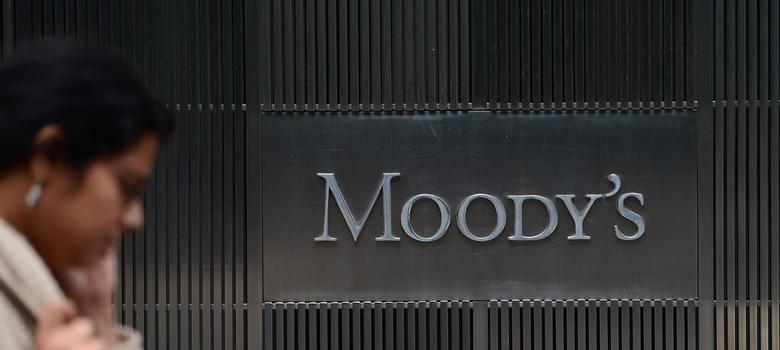
But three days later, on October 31, the elation was dampened when Moody’s Analytics, a division of the bond rating and risk management company, sounded a note of caution: “While Modi has largely distanced himself from the nationalist gibes, the belligerent provocation of various Indian minorities has raised ethnic tensions. Along with a possible increase in violence, the government will face stiffer opposition in the Upper House as debate turns away from economic policy. Modi must keep his members in check or risk losing domestic and global credibility.”
The Moody’s Analytics report not only blamed the government for failing to deliver on the promised reforms but also raised questions over its ability to deliver on them. “Overall, it’s unclear whether India can deliver the promised reforms and hit its growth potential,” the report said. “Undoubtedly, numerous political outcomes will dictate the extent of success.” This is some serious criticism.
Moody's influence
By its own definition, Moody’s is an essential component of the global capital markets, providing credit ratings, research, tools and analysis that contribute to transparent and integrated financial markets. Moody’s Corporation is the parent company of both Moody’s Investors Service (which provides credit ratings and research covering debt instruments and securities) and Moody’s Analytics (which offers leading-edge software, advisory services and research for credit and economic analysis and financial risk management). The Corporation, which reported revenue of $3.3 billion in 2014, employs approximately 10,200 people worldwide and maintains a presence in 35 countries.
The Moody’s Investors Service is synonymous with leadership in monitoring and analysing credit risk worldwide. It provides credit ratings of over 120 sovereign nations, approximately 11,000 corporate issuers and tens of thousands of players in the global financial markets. Meanwhile, Moody’s Analytics “helps capital markets and risk management professionals worldwide respond to an evolving marketplace with confidence”. This simply means that whatever either of the Moody’s entities determines influences debt and investment risk ratings of countries and corporations alike. A cautionary note from Moody’s, therefore, is not without consequences.
Because the discourse on economic policy is mainly focused on fiscal measures, monetary interventions, welfare programmes and other such highly visible instruments of government action, when an economy does poorly a disproportionate amount of the debate centres on fiscal policy instruments. But, more often than not, economic lethargy is a consequence of the overall administrative ecosystem that determines how easily a business can be started and closed, the efficiency with which contracts are enforced, the rules of administration pertaining to a variety of activities – such as getting permits for electricity and doing the paperwork for exports and imports.
Recognising that these have more bearing on an economy’s progress, the World Bank has been focusing on countries improving their Ease of Doing Business standards. Thus, the standing on this index also has a major impact on attracting investment to a country. India, given its cumbersome bureaucratic processes and its rent-collecting proclivities, has been striving to clamber up on this index.
Shooting the messenger
In this context, it is interesting to see how the government responded to the two judgements in late October.
The government reacted dismissively to the Moody’s Analytics reprimand with this statement: “The government notes with distress that the personal opinion of a junior analyst was passed off as a commentary on India by a rating agency by the media to buttress the narrative it wants to portray.” Besides this, the government tried to split hairs saying that “readers were not informed” by the media about the difference between Moody’s Analytics and Moody’s Investors Service. It was as if the value of the opinion of the two Moody’s services is dependent on the front office nameplate.
The fact is, most of the analysis, whether it is by Moody’s or the World Bank or even the Central Intelligence Agency, is authored by the gnomes dwelling in the lower warrens. It is they who track countries and corporations with the single-minded purpose of giving clients, whether in-house or outside, inputs often deemed critical in decision-making.
Killing the messenger when the message is unpalatable is not uncommon. In Anthony and Cleopatra, when told that Antony has married another woman, Cleopatra threatens to treat the messenger’s eyes as balls, eliciting the response “Gracious madam, I that do bring the news made not the match”. The modern version of this is visible every time the media is blamed for presenting bad news. According to Bruce Sanford, a well-known American press lawyer, “shooting the messenger may be a time-honored emotional response to unwelcome news, but it is not a very effective method of remaining well-informed”.
In stark contrast to its criticism of Moody’s Analytics, the government reacted with exaggerated elation to the World Bank’s Ease of Doing Business rating. It was dodgy with facts in the celebrations. Speaking for the government, Amitabh Kant, secretary in the Department Of Industrial Policy & Promotion, claimed: “We have reversed the trend by moving up and no country has moved 12 spots in a year. Major reforms are going to kick in from next year, which will further improve our position. We are absolutely confident of being in top 50 in three years as per the target set by PM.”
Soumya Kanti Ghosh, chief economic advisor at the State Bank of India, said: “Government has taken a lot of micro steps in the last one year and some reforms have been politically sensitive. States have also got into action...if we continue moving up the ranks at this pace we can break into the top 100 very soon.” While some elation is understandable, the fact is that India had moved up only four spots from 134 to 130 in the year 2014-'15.
India’s Ease of Doing Business rating, which was 134 in the last year of the United Progressive Alliance government, had moved up from 142 in the year before. The National Democratic Alliance government inherited an improving EODB. Instead of pointing out this incremental rise, Amitabh Kant leapfrogged the government’s performance from 142 to 130 by missing out the 134 in the intervening year. This cannot be glossed over as mere clerical error. Besides, clerks don’t make such errors.
Taking credit from the past
The EODB classification depends on 10 indicators, including the ease of registering a business, getting construction permits, registering property, getting bank credit and getting electricity. In five of these, the position remains unchanged. In fact, it worsened on getting credit and paying taxes. It moved up from 184 to 183 in getting construction permits and from 164 to 155 on starting a business. The big jump in ease of getting electricity, from 99 to 70, contributing hugely to the improvement of the overall index.
During the fiscal year 2014-’15, a total of 1,030.785 billion KWh of electricity was generated, and there was a shortfall of 38.138 billion KWh (-3.6%) against the anticipated 5.1% deficit. In May 2015, a report of the Central Electricity Authority anticipated that in 2015-’16 the base load energy deficit will be 2.1% and peaking shortage will be 2.6%. The marginal deficit figures clearly reflect that India will become electricity surplus during the 12th five-year plan period.
Besides, the flatlined demand curve for electricity and the mothballing of 57 thermal power units due to lack of demand detracts from an industrial revival story. The overall electricity situation has been on the mend for much longer than the previous year, and the government should now be more concerned about the slowdown in demand.
The truth is, the Modi government does not see government as a continuum and wishes to appropriate what is not entirely its due. Now well into its second year, it should start looking more at its tenure, instead of conveniently reaching into the past to garner credit.
We welcome your comments at
letters@scroll.in.
But three days later, on October 31, the elation was dampened when Moody’s Analytics, a division of the bond rating and risk management company, sounded a note of caution: “While Modi has largely distanced himself from the nationalist gibes, the belligerent provocation of various Indian minorities has raised ethnic tensions. Along with a possible increase in violence, the government will face stiffer opposition in the Upper House as debate turns away from economic policy. Modi must keep his members in check or risk losing domestic and global credibility.”
The Moody’s Analytics report not only blamed the government for failing to deliver on the promised reforms but also raised questions over its ability to deliver on them. “Overall, it’s unclear whether India can deliver the promised reforms and hit its growth potential,” the report said. “Undoubtedly, numerous political outcomes will dictate the extent of success.” This is some serious criticism.
Moody's influence
By its own definition, Moody’s is an essential component of the global capital markets, providing credit ratings, research, tools and analysis that contribute to transparent and integrated financial markets. Moody’s Corporation is the parent company of both Moody’s Investors Service (which provides credit ratings and research covering debt instruments and securities) and Moody’s Analytics (which offers leading-edge software, advisory services and research for credit and economic analysis and financial risk management). The Corporation, which reported revenue of $3.3 billion in 2014, employs approximately 10,200 people worldwide and maintains a presence in 35 countries.
The Moody’s Investors Service is synonymous with leadership in monitoring and analysing credit risk worldwide. It provides credit ratings of over 120 sovereign nations, approximately 11,000 corporate issuers and tens of thousands of players in the global financial markets. Meanwhile, Moody’s Analytics “helps capital markets and risk management professionals worldwide respond to an evolving marketplace with confidence”. This simply means that whatever either of the Moody’s entities determines influences debt and investment risk ratings of countries and corporations alike. A cautionary note from Moody’s, therefore, is not without consequences.
Because the discourse on economic policy is mainly focused on fiscal measures, monetary interventions, welfare programmes and other such highly visible instruments of government action, when an economy does poorly a disproportionate amount of the debate centres on fiscal policy instruments. But, more often than not, economic lethargy is a consequence of the overall administrative ecosystem that determines how easily a business can be started and closed, the efficiency with which contracts are enforced, the rules of administration pertaining to a variety of activities – such as getting permits for electricity and doing the paperwork for exports and imports.
Recognising that these have more bearing on an economy’s progress, the World Bank has been focusing on countries improving their Ease of Doing Business standards. Thus, the standing on this index also has a major impact on attracting investment to a country. India, given its cumbersome bureaucratic processes and its rent-collecting proclivities, has been striving to clamber up on this index.
Shooting the messenger
In this context, it is interesting to see how the government responded to the two judgements in late October.
The government reacted dismissively to the Moody’s Analytics reprimand with this statement: “The government notes with distress that the personal opinion of a junior analyst was passed off as a commentary on India by a rating agency by the media to buttress the narrative it wants to portray.” Besides this, the government tried to split hairs saying that “readers were not informed” by the media about the difference between Moody’s Analytics and Moody’s Investors Service. It was as if the value of the opinion of the two Moody’s services is dependent on the front office nameplate.
The fact is, most of the analysis, whether it is by Moody’s or the World Bank or even the Central Intelligence Agency, is authored by the gnomes dwelling in the lower warrens. It is they who track countries and corporations with the single-minded purpose of giving clients, whether in-house or outside, inputs often deemed critical in decision-making.
Killing the messenger when the message is unpalatable is not uncommon. In Anthony and Cleopatra, when told that Antony has married another woman, Cleopatra threatens to treat the messenger’s eyes as balls, eliciting the response “Gracious madam, I that do bring the news made not the match”. The modern version of this is visible every time the media is blamed for presenting bad news. According to Bruce Sanford, a well-known American press lawyer, “shooting the messenger may be a time-honored emotional response to unwelcome news, but it is not a very effective method of remaining well-informed”.
In stark contrast to its criticism of Moody’s Analytics, the government reacted with exaggerated elation to the World Bank’s Ease of Doing Business rating. It was dodgy with facts in the celebrations. Speaking for the government, Amitabh Kant, secretary in the Department Of Industrial Policy & Promotion, claimed: “We have reversed the trend by moving up and no country has moved 12 spots in a year. Major reforms are going to kick in from next year, which will further improve our position. We are absolutely confident of being in top 50 in three years as per the target set by PM.”
Soumya Kanti Ghosh, chief economic advisor at the State Bank of India, said: “Government has taken a lot of micro steps in the last one year and some reforms have been politically sensitive. States have also got into action...if we continue moving up the ranks at this pace we can break into the top 100 very soon.” While some elation is understandable, the fact is that India had moved up only four spots from 134 to 130 in the year 2014-'15.
India’s Ease of Doing Business rating, which was 134 in the last year of the United Progressive Alliance government, had moved up from 142 in the year before. The National Democratic Alliance government inherited an improving EODB. Instead of pointing out this incremental rise, Amitabh Kant leapfrogged the government’s performance from 142 to 130 by missing out the 134 in the intervening year. This cannot be glossed over as mere clerical error. Besides, clerks don’t make such errors.
Taking credit from the past
The EODB classification depends on 10 indicators, including the ease of registering a business, getting construction permits, registering property, getting bank credit and getting electricity. In five of these, the position remains unchanged. In fact, it worsened on getting credit and paying taxes. It moved up from 184 to 183 in getting construction permits and from 164 to 155 on starting a business. The big jump in ease of getting electricity, from 99 to 70, contributing hugely to the improvement of the overall index.
During the fiscal year 2014-’15, a total of 1,030.785 billion KWh of electricity was generated, and there was a shortfall of 38.138 billion KWh (-3.6%) against the anticipated 5.1% deficit. In May 2015, a report of the Central Electricity Authority anticipated that in 2015-’16 the base load energy deficit will be 2.1% and peaking shortage will be 2.6%. The marginal deficit figures clearly reflect that India will become electricity surplus during the 12th five-year plan period.
Besides, the flatlined demand curve for electricity and the mothballing of 57 thermal power units due to lack of demand detracts from an industrial revival story. The overall electricity situation has been on the mend for much longer than the previous year, and the government should now be more concerned about the slowdown in demand.
The truth is, the Modi government does not see government as a continuum and wishes to appropriate what is not entirely its due. Now well into its second year, it should start looking more at its tenure, instead of conveniently reaching into the past to garner credit.
